Showing posts with label social media. Show all posts

June 12, 2012

Why will Facebook always be free? Here’s why...

On its homepage, Facebook prominently advertises that its service is "free and always will be."  Yet it hasn't stopped false rumors of a pay scheme from going viral on numerous occasions.

Why will Facebook always be free?
Here’s why:  It doesn’t need the money.

In 2011 Facebook pulled in approximately $4.27 billion in revenue -- double what the company made in 2010.  Projections for 2012 near $5 billion and last month we saw the social media giant go public -- bringing in significantly more capital.  Impressive numbers, but the bottom line is not necessarily the bottom line.

The company’s business model revolves around having as many users as possible. Remaining free is paramount to doing that.

Facebook makes money through three sources while allowing users on its site for free:

1) Advertising
2) Virtual Goods
3) Applications


Restricting users’ ability to use the site would actually be detrimental to that model.

Advertising
By the end of Q1, 2012, 82% of Facebook’s revenue came exclusively from advertising.    Highly targeted, affordable advertising based on the plethora of data that its members share on the site is extremely valuable to brand’s looking to engage with their target audience.  Facebook didn’t even introduce its ad platform until 2007 — because the company wanted to focus on adding users as quickly as possible – their most valuable money-making commodity.

When you see “Sponsored” on the right-hand side of Facebook, someone has paid for those links. Advertisers have the option of paying per 1,000 impressions (every time it shows up on somebody’s screen it’s an impression) or per click. Therefore, depending on how the advertisers set up their ads, Facebook gets paid every time someone clicks on or views an ad. A huge part of the Internet works this way, with ads generating many thousands of sites’ revenue.
  
By the end of Q1 2012, the network has generated 82% of their revenue through advertising.
However, the difference between it's division of revenue among advertising and other sources continues to increase. 

The way Facebook earns even more money with ads goes beyond offering advertisers good targeting data.  Facebook thrives monetarily from being useful to visitors. When Facebook makes a change, you can bet it’s either to:

  • Generate attention to their services so that people will use Facebook more and click/view more ads (note that even the “I HATE THE NEW FACEBOOK!” comments keep the attention on Facebook itself)
  • Generate more revenue from the ads (It’s rumored that Facebook will soon stop delivering business updates into your feed unless you interact with them a lot, meaning that they will have to buy advertising on Facebook)
  • Respond to features of another service (Facebook is changing a LOT in response to Google+),
    or
  • Improve their performance (meaning their servers don’t have to do as much work)

All of these things are driven by money.

If you Book Them, Will They Come?
In a recent poll by Reuters/Ipsos, four out of five Facebook users said neither advertisements nor comments on the social network have ever led them to buy a product or service.  The vast majority of Facebook users say they ignore ads on the social network.  Google appears to be more effective at attracting clicks, as The Wall Street Journal cites a click-rate that is seven times that of Facebook.

Facebook has also proven ineffective in a B2B environment. Like all other Internet ads, Facebook ads also have a very low conversion ratio. However, if you follow my blog regularly, you know the importance I place on integrated strategy, so for my recommendation would always be for B2B’s using Facebook to use it as a supplemental marketing strategy rather than a sole marketing strategy.  (As with any marketing, the key to success is to understand the benefits and limitations of different advertising tools and to identify what fits the company and the product.)

In the face of scrutiny regarding the effectiveness of their ads, Facebook is now rebuffing claims that their advertisements are ineffective.  They’ve come out with their own research results, which show that most ad campaigns get companies $3 for every $1 they spend.  The Los Angeles Times reports that the data released by Facebook, together with comScore, shows that 70% of ad campaigns will get advertisers a return three times what they put in and, in nearly half of all campaigns, Facebook ads get companies $5 for every $1.

“This provides some strong evidence that Facebook can be an effective marketing channel,” said Andrew Lipsman, vice president of industry analysis at ComScore, to Bloomberg. “These are strong results.”

Virtual Goods
Zynga is an innovative company that brought casual gaming to the masses, there most popular game being FarmVille that users can play via Facebook -- and of course share socially their journey through the game.  As far as their business model, Zynga gives their games away for free, but charges gamers for “virtual goods” that can be purchased inside of a game.  These “virtual goods” allow gamers to experience new capabilities and access new features that were previously locked down.   While this may sound like somewhat of a gimmick, the “virtual goods” business model has been extremely lucrative for the company.


Facebook takes a cut when users buy virtual goods on games played through the network.  In the FarmVille example – simply put, each time a user buys a cow, they put in their credit card information and Facebook takes a 30% cut of Zynga's revenue on that cow.  And a roughly similar cut from other companies.

How big a business is this?  According to PC Magazine, Zynga contributed about $445 million to Facebook's profits last year.  The worldwide revenue from sales of virtual goods is expected to hit $15 billion in 2014, and Facebook plans to continue to get a growing percentage of that market.

And “virtual,” is not necessarily a literal interpretation of a cow you neither have to house nor feed.  Retailers are offering more on the Facebook platform and for Facebook that means a cut. It won't be able to take the same 30% it gets from Zynga, but if say, J. Crew, starts offering shopping without leaving Facebook, if the social network takes even 5%, that could be meaningful to its bottom line.

Applications
There is a way that Facebook could make money with integrated applications and services. 
Let’s take Spotify for example.  Spotify did backflips given the opportunity to partner with Facebook and leverage the network’s massive audience, an audience who spends 15% of their total Online time on the social network.  Facebook and Spotify have a streaming pact that allows the cloud-based music service on the profile pages of millions -- note that you must have a Facebook account to access Spotify, this is key. And Spotify was happy to enter into this agreement for free, especially given their recent gargantuan competition in the forms of Amazon Cloud Player and Google Music.

Right now, no money is changing hands.  It’s actually been a dream of Zuckerberg for quite some time to have a music platform on the network with many previous plans going the way of the “Facebook Poke.”  The partnership with Spotify signifies how Facebook is flexing its muscles in the media space, offering services that keep people within the social network, rather than scouring other parts of the web for content.
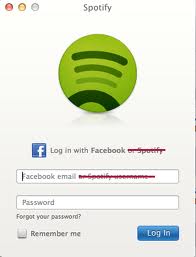
So, how can this partnership become lucrative for Facebook?  My hunch?  Spotify is trying to get bought by Facebook. And why not? Instagram, with 10 million active users, recently sold to Facebook for a billion dollars. Imagine what Spotify could sell for with 8 million more users than Instagram, plus an already established advertising platform?

If Facebook bought Spotify, almost all of Spotify’s 18 million users are already plugged in using their Facebook accounts. Users’ Spotify activity is already seamlessly integrated into Facebook. Spotify already has an ad platform, the main way that Facebook makes money. And finally, Spotify already has apps, which are a major part of Facebook’s brand platform.  All this will become the property of Facebook. 

With music being integrated into the social network, movies and TV shows (think Hulu) are bound to find their way in too, especially as people become more inclined to consume their content in a social way.  Why listen to a great new song by yourself when you can hear it with your friends too? 

Conclusion
Facebook may charge for some things eventually, but access to your account and normal activities will definitely not be one of them.

The one thing that all of Facebook’s revenue generating models have in common is that they rely on a critical mass of users to be successful. Facebook has that, and would never risk losing it by charging people for basic access to the tools that make its multi-billion dollar business work.

By Jennifer Pricci

February 3, 2012

7 Unwritten Rules Of Social Media

Social media seems easy especially because the barrier to entry is low. You can be up and running on any social media platform in minutes, and usually for free. In reality, social media is hard for exactly the same reason. When the barrier to entry is low, the barrier to attention is high.

The fundamental path to succeeding with social media is to consistently contribute meaningfully—engaging with you should make the lives of those engaging more meaningful. The bonus would be to achieve this without adding costs to the others.

As you think through your social media strategy, here are seven unwritten rules of social media.

1. Connection does not imply permission
Many social networks make it easy for you to connect with anyone. You can follow someone on Twitter, Quora or Google Plus without needing their permission to do that. A small percentage of them might follow you back. If they do, you have a two-way connection. Don’t confuse the two-way connection as permission to interrupt them. You need to build a relationship and there is no shortcut for that.

2. Access does not imply entitlement
When you connect with someone on a social network and start engaging with them, you have access. Don’t assume that they owe you something because you are now engaging them on social media.

3. Activity is not productivity
The barrier to create content on a social network is virtually non-existent. This means that you can write whatever you want irrespective of whether it makes sense or not. You can get extremely busy with social media— trying to post anything and everything. In your enthusiasm to share, you might drop the quality of what you share and that’s when the problem starts—people will silently start to ignore you.

4. More is not better
When what you write about is a hit for some reason, you tend to end up doing more of it on social media forgetting that everything has a lifecycle of its own. What’s hot today may not stay hot tomorrow and what’s hot tomorrow may not stay hot. So trying to do more of what works does not guarantee success—you need to adapt all the time.

5. Reciprocation is optional
Don’t do anything with an expectation that someone will reciprocate back. Equal actions don’t create equal impact on social media. Say you have a 1,000 followers and you share something from another person who has 10,000 followers. Expecting him to share something from you would mean you are expecting someone to give back ten times of what you gave them.

6. Amplification without accomplishment is futile
Social media is a great amplifier. But fundamentals of mathematics are always at play. You can multiply zero with anything and the result will still be zero. You need relevant accomplishments as the foundation and social media can help amplify them. Sans accomplishments, it’s hard to amplify. Unless your business is to make money with social media, you have to get out of social media and spend time on building some meaningful accomplishments. Once you have them, you can use those to extend your influence using social media.

7. Engagement without enrichment is not effective
You are only as rich as the enrichment you bring to the world around you. When you enrich someone, you make their life more meaningful—at home or at work or in both places. Social media provides an excellent opportunity enrich people’s lives. Engagement for the sake of engagement can only make you get tired. Engage with an intention to enrich and you will not only win with social media but also makes this world a better place.

November 16, 2011

How to Monetize Social Media

As someone who provides Social Media Marketing solutions, both on behalf of employing organizations and clients, I am often asked... "OK, I am onboard, but how do you make money from all of this?"

I am a disciple of Inbound Marketing. I believe in this day and age this is a philosophy that works. It's simple in theory; create great content, promote that content via social media, attract qualified leads and convert those leads into customers. Many Marketers out there work in conjunction with sales. I personally have been in positions where the Marketers job ends at garnering qualified leads and passing those leads off to sales to close. But Marketers are often tested by sales... what am I supposed to do with this information. Marketers are often frustrated by sales when they don't jump on such qualified lead data... this is an age old quandry between the two departments and why I contend there must be a happy marriage between the two departments... but that is a story for another day.

Today's story?...
How Marketers can help themselves by helping sales monetize their social media efforts.

Companies are not only getting the word out about their brands using social media such as Facebook and Twitter but are also making money.

Many businesses have not found sites such as Facebook, Twitter and YouTube useful in making money. Building genuine online relationships that are also good for the bottom line is not so easy. There is a lot of trial and error. But while monetizing social media is difficult it is not impossible. There are companies that are getting the word out about their brands using social media and are turning a profit.

Take The New York Jets. The NFL team launched their Ultimate Fan social game in September 2010, which was the first revenue generating Facebook app to be backed by a pro sports team. The application lets football fans do online what they would normally do at home and in stadiums—root for their favorite teams and players, predict game scores, and hold a virtual tailgate party with other fans from across the globe. Ultimate Fan has since lured four major sponsors integrating their brands: MetLife, Motorola, SNY and HotelPlanner.com.

The Jets also communicate regularly on Twitter. They even advertised a Twitter-based contest to win tickets to their 2011 AFC playoff championship game against the Pittsburgh Steelers. The Jets are able to engage with their fans and make them feel like they are part of the team. They are leveraging social medial to capitalize on their fans' passion for the team and their willingness to share that fervor.

Like many companies, your social media efforts have started small and grew organically. To capitalize on those efforts to generate sales and revenues you need to have a team of people dedicated to your social media presence. You also will need a deep understanding of your audience, a creative vision, and a way to measure results in order to execute a successful strategy.

Here are some ways your social media can be monetized…

How to Monetize Social Media: Build Brand Awareness
The first step is to use traditional media or word-of-mouth advertising to drive awareness and traffic to your Twitter, Facebook, and YouTube pages. Unless you already have a recognizable brand like Nike or Apple, your brand needs to develop social media magnetism before you can look to make any money. You also need to create circular momentum across many platforms when designing your social media campaign. By providing multiple channels for users to talk with you, you let customers choose the channel that they are most comfortable with, by doing this you increase the likelihood that they'll connect with your brand in any number of ways.

How to Monetize Social Media: Engage Your Audience
Social media is about having a dialogue. When you have a dialogue with a customer or prospect, the communication is much more fulfilling and much more profitable. The PETCO brand has developed a strong presence in social media. The pet store chain has a YouTube channel, its Facebook page generates a lot of discussions among pet owners, and there's lots of activity on its PETCO Scoop Blog, which has received hundreds of “Likes” and Comments. PETCO's customers are true pet lovers and treat their pets as part of the family. The company tries to keep conversation going by aiming Facebook and Twitter posts so that there's an explicit question to answer, or at least a specific piece of information to which people can react. You have to know your community and know how to take part within that community and through that create great content or conversation that will raise awareness and increase sales.

How to Monetize Social Media: Offer Special Promotions
Dell Computers exemplifies a company that is selling products using social media. Its Twitter page, @DellOutlet, offers discounts exclusively to followers. Dell might tweet 15 percent off any Dell Outlet laptop or desktop with a special coupon code entered at checkout so they'll know which tweet you are seeing. @DellOutlet also points you to a specific web page. There is some interaction in terms of chats with tweeters. @DellOutlet has garnered more than 1.6 million followers and generated more than $2 million in incremental revenues for Dell. Traditionally, Dell would have spent a lot of money running print ads. Today, they can write a 140-character promotion to reach customers.

PETCO is yet another example. The company provided a promo code to their customers for $40 in free shipping. The person who shared their code with the most people won a $500 PETCO gift card. About 40% of the sales that resulted from this promotional push came from new consumers. The desire to save a few bucks drove loyal PETCO customers to connect with the larger pet owner community and spread the word about the store via social media.

How to Monetize Social Media: Use Media Advertising
Many companies have used display advertising (banners) and contextual advertising such as Google AdWords. Many bloggers use Google Adsense to make money. There are plugins to help; you make money from clicks. There are also ad networks that you can join that pool several advertisers. You get a code and banner ads rotate from their network. This is an item that you will want to include in your advertising rate sheet. Major advertisers who buy display ads are finally beginning to figure out how to reach audiences through social networks, and have begun to shift significant dollars into Facebook.

Instead of a typical banner ad, consider offering a microsite, which would be equivalent to a paid supplement. For example, you could devote one page (a link on your website) specifically to an advertiser's products and services. Or you can become an affiliate. With affiliate marketing you get paid to refer people to another business.

Consider combining rich media advertising with display advertising. Video advertising and promotional material can be quickly and easily streamed to your social community. Another consideration is charging for sponsorship on a monthly, quarterly, or annual basis. Of course, attention needs to be paid between balancing the delivery of the rich media advertising against the comfort level of your customer base.

How to Monetize Social Media: Brand Within Applications
The best way to use apps is to create something that is functional such as a calculator, entertaining such as a game, or provides some sort of social connection such as an app just for your community. Your app can be fee based or you can give it away to build a relationship with customers. A number of well-known company brands use mobile apps to interact with their loyal customers, including Target, Coca-Cola, Nike and Gucci.

The fashion designer touts a luxury lifestyle application that is a quintessential example of branded mobile marketing. Through "Gucci Connect" users were able use their mobile devices, such as iPhone or iPad, for virtual access of a Milan fashion show, watch live runway and behind the scenes video coupled with live chat between virtual guests through Facebook and Twitter. Exclusive also to iPhone app subscribers are interactive games. The "Gucci Live" section features a music channel. Subscribers stay "in the know" with a calendar of upcoming brand events and feature articles. The Gucci "Little Black Book" provides recommendations to the hottest restaurants, nightclubs, and hotels in various cities throughout the world.

How to Monetize Social Media: Set Up Shop on Facebook
Facebook fan pages are another way to generate sales and enthusiasm especially if you have loyal fans that follow your updates. You can list your products on your Facebook page for fans to easily share with their own friends and essentially allow your product offerings to go viral.

Businesses are increasingly selling their goods on Facebook. There are various e-commerce solutions available. One is 8thBridge which is helping companies like 1-800-Flowers and HuateLook sell from Facebook. A special deal 8thBridge ran for the designer brands retailer HauteLook along with fashion designer Diane von Furstenberg generated more than $100,000 in sales in one day, 40 percent of which came from new customers. Users were given a $10 coupon for every new member that they brought in. Using 8thBridge, 1-800-Flowers is drawing people into buying flowers and other gifts for friends and family while they are already thinking about them on Facebook.

Payvment is another storefront option that provides online stores for companies to sell on Facebook. It has a network of more than 60,000 merchants using its self-serve technology. Payvment generally serves smaller clients while 8thBridge caters to small- and medium-sized businesses. According to a study released by Forrester Research, Facebook is more suitable for small retailers, niche products, or steeply discounted items. Most of the benefit that big retailers get from Facebook is branding their company but not actual purchases, Forrester further reports. Moreover, some products are inherently social such as books, DVDs, and event tickets, which have been successful because they are easy to buy and sell online.

How to Monetize Social Media: Use as a Retention Tool
Companies don't always need to use social media as a sales tool or to acquire news customers, they can use it as a customer retention tool. If someone likes or follows your business, it's because they're interested in hearing from you on some regular basis. It's important that you have a routine schedule for your blogs, tweets, and postings. Keeping your fans and followers up to date on what's new and happening with your business or industry will keep them engaged with you and keep your brand top-of-mind.

What have you done to monetize your social media marketing efforts?


By Jennifer Pricci
www.jenniferpricci.com
jennifer@jenniferpricci.com

July 11, 2011

6 Reasons Businesses Need to Blog


A business blog is central to a successful inbound marketing strategy that will help you get found and generate more inbound leads online. Why?

Here are 6 reasons your business needs to blog:

1. Build thought leadership
Build thought leadership by showing your expertise and becoming a go-to resource for prospects and media.

2. Get SEO value for each blog article
More content = more opportunities to get found online.

3. Engage in a dialogue with customers and prospects through blog comments
Host conversations and respond to issues or questions.

4. Attract social media followers
Businesses that blog enjoy more social media reach because they have content to share.

5. Generate more leads online.
A HubSpot study found that businesses that blog generate more than 67% more leads online compared to businesses that don't blog.

6. Humanize your brand
Give your company a voice of the people behind your brand.

What benefits is your business seeing by blogging?


By Jennifer Pricci

June 25, 2011

What is The Social Funnel?...
And Why You Need to Build One

Social media channels increasing the venues of choice for consumers to collect information and connect with brands, presents a strategic opportunity for companies to create a “Social Funnel” above the traditional marketing and sales funnel – where consumers take the lead in finding information and content that ultimately drives brand preference and sales.

In Winning the Consumer Decision Journey, McKinsey & Company’s David Court shares that, in the new social and digital age, “the path to purchase and loyalty is now complex, iterative, and dynamic.” In this new environment, creating a Social Funnel allows brands to identify and have access to buyers long before the buying process begins.

The Social Funnel Defined
The Social Funnel is a dynamic collection of consumer activity across social media channels, which sits on top of the traditional marketing and sales funnel. Developing a Social Funnel requires a systematic process of identifying and capturing consumer interactions across a variety of social media channels, aggregating this activity in a social customer relationship management (SCRM) infrastructure, and continually mining this insight to deliver relevant content to the right social profile at the right time. The chart below describes the Social Funnel and its tie to the traditional marketing and sales funnel:


To be effective, Social Funnels need to be tightly integrated with traditional customer relationship management (CRM) systems to create a 360-degree view of a prospect to allow marketers to nurture this relationship over time using a combination of social and traditional, experts agree that this integration holds a lot of potential. “Integrating social deeper into existing CRMs is going to be very popular in 2011 – we expect to see a growing number of brands tying customer records to public social profiles and bread crumbs”, says Nathaniel Perez, head of social experience at SapientNitro.

The integration of social media with the traditional funnel is one of the key priorities for brands in 2011. Although only 6% of companies today report that they fully integrate social with traditional marketing funnels.

David Berkowitz, senior director of emerging media and innovation for digital marketing agency 360i, agrees but tempers things by saying that “we are still early in the process but tying social profiles to CRM systems will be big.”


We see a growing number of companies starting to tie social profiles to their CRM systems. As this process continues to evolve, we expect to see social media becoming more of a critical component throughout the entire customer lifecycle. Systems that support the integration of social with CRM will increase in adoption over the course of the next 12 to 18 months, giving organizations the ability to seamlessly combine data from multiple systems easily and efficiently.


By Jennifer Pricci

February 15, 2011

Achieving The Coveted:Viral Marketing

Viral campaigns yield the highest ROI... Information about your product spreads naturally, like a contagious disease... only a good one...


I once read up on the 5 C’s of viral marketing:
Community, Compelling, Comedy, Charity, and Contest

Let's talk Community...

We all know that viral marketing in the social media space is all about communities. In fact, I would argue that communities play a larger role than most people think, both online and offline. They can build a brand, kill a brand, make a career, break a career, influence elections, etc. Think about it; from an offline perspective, life is community driven through PTA organizations, church groups, sports leagues, stay-at-home mommy groups, and various school organizations (sororities, fraternities) to name a few. And of course online, you have Myspace, Facebook, Linkedin, Digg, Stumbledupon and hundreds of other social media sites jumping in the scene daily.

Within each of these online/offline communities consumers are talking and having conversations with each other. And, they are sharing opinions, experiences, advice, recommendations and commentary about products, services and companies usually based on real personal experience.

THIS IS VIRAL MARKETING.

The challenge with viral marketing is that it’s not always viral, if that makes any sense... Often, marketers plan for and label their marketing plans as “viral” but 9 times out of 10, it never catches on. It’s the things that just happen by accident that become viral. Remember the Diet Coke and Mentos video? At first, Coca-Cola distanced themselves from the exploding Diet Coke and Mentos viral video phenomenon, fearing it would damage their reputation and brand; however, just recently that have fully embraced the concept and now there are over 7,000 consumer generated videos on YouTube, millions of pageviews, hundreds of comments, and favored by thousands of fans. The community here is not only the millions of YouTube enthusiasts, but also the micro-communities of people and their offline conversations about these videos.

  • Formulate your marketing message. Think about the product or service you are advertising and create a message that communicates the benefits and uses of what you are selling. A website is nonnegotiable.
  • Make the content on your website sharable. For example, you can allow readers to embed a funny video from your website onto their own blogs. An "email this article to your friend" link is another way information spreads from one person to another.
  • Use email as a viral marketing tool. Include a marketing message about your product or service in the tag lines of your emails and also include your advertising message in auto responder emails you send to those who email you.
  • Post your content on other Internet sites such as message boards and blogs. However, do this carefully; many forum managers are now aware of this practice and may delete your messages if they think it's spam.
  • Incorporate your marketing message into rich media. Video clips and Flash games are very popular on the Internet, so if you have a great idea for this medium your message will spread like wildfire.
  • Spread your message off line as well. Tell your friends and colleagues about your product or service and hand them business cards with the URL on them along with a catchy tag line, perhaps the same one you use in your emails.

What are you doing to boost your buzz factor?


By Jennifer Pricci

January 12, 2011

RIP Cold Calling
Survived by Social Networking

Cold calling has been served notice, a new era beckons and with it an altogether different way of working. Social networking has arrived and will soon replace cold calling as the predominant method of prospecting in business.

I know many people will think that there is no replacement for activity, specifically picking up the phone. Yet, no matter how intelligent you are about cold calling, it is what it is – speculative, scatter gun selling, not to mention costly and increasingly ineffective.

Consider the following data I found online...
In a test which spent an equal amount of time cold calling and using social media (9 AM - 5:30 PM; M - F).

Cold Calling Results

  • Outbound calls made 325
  • Meaningful conversations (pitches) and brand touches 80
  • Meetings made 4
  • Sales made (as a direct result of cold calling) 0
These are average conversion ratios for time spent but it comes with much overhead.

Social Media Results
  • Inbound calls generated 8
  • Meetings as result of inbound calls 3
  • Sales as a result of inbound calls 2
  • Brand touches (from site statistics unique views of content) 422
  • Visitors to sales associate's blog Subscribers (RSS) to sales associate's content 27
  • People following sales associate's Twitter 12
  • New contacts 71 (on LinkedIn, Facebook, WeCanDo.BIZ, etc)
  • Listeners to sales associate's Podcast 83
  • Opportunities to sell found 21
  • Online conversations had 39
  • Warm call list (names generated expecting a call) 11
The cost of the social networking blitz to find new business opportunities, other than time and internet connection are small, if anything at all. Most importantly 2 sales were closed, covering any cost associated with the activity and generating a very healthy return.

The central question, however, is do modern-day sales people have the level of skill required to conduct a social media campaign individually? The simple answer is no. Not all salespeople will have the necessary skills, but having a skills gap is nothing new on the sales floor otherwise we wouldn’t have the multi-million pound training industry!

Can the skills be taught quickly and cost effectively? Yes. I have always taught people that sales is a process: follow steps one through five to achieve your aims. Social media networking can be processed as well, giving salespeople clear guidelines on the ‘how to’ and ‘how not to’. We spend millions every year teaching salespeople to cold call better, use the latest CRM (customer relationship management) system, be better team players and so on; and so it must come to pass that companies will need to train all staff to be ‘social media savvy’ as it extends far beyond just sales – marketing and service need to be in on the picture as well.

Naysayers?... Agreed, updating your Facebook page with pictures of the weekend, playing silly games, nudging or poking other people is not the best use of your company’s time. But creating engaging, thought-provoking, discussion-opening content, centred around your products or services is.

Social media networking will reduce dependence on cold calling. I am not saying it will eradicate the need for the telephone – that perhaps is to bold an idea. But I am certain it will become the first step in prospecting for new business.

What kind of results are you seeing when you pin Cold Calling vs. Social Networking?


By Jennifer Pricci

October 7, 2010

My Top Five Fab Social Media Marketing Campaigns

By Jennifer Pricci

Social Media Marketing is in full swing, and almost all of the world’s top brands are utilizing it in one way or another. The campaigns aren’t always the easiest to execute (and sometimes go bad, although that’s another blog post), but if done correctly they have the potential to generate a massive return on investment.

How about a countdown of my favorites...

5  Google  Parisian Love

Google left a strong impression by appealing to human emotion in February 2010 when they ran a TV advertisement campaign entitled ‘Parisian Love’ during the 44th annual Superbowl. The ad demonstrated some of Google’s many search-based features, and was based around somebody debating whether to move to France to meet up with a lover.


The ad definitely generated a lot of buzz which Google capitalized on by surrounding its Parisian Love campaign by launching a Search Stories mini-site, where users can create and share their own user-generated, Superbowl-style advertisement.

Watch My Search Story


4  Starbucks  My Starbucks Idea

My Starbucks Idea is an excellent example of crowd-sourcing quality information for the purpose of business development. The great thing about this campaign isn’t just that they acquired (and continue to acquire) a huge amount of business ideas for free, but that they’re also generating brand awareness and customer engagement as a bi-product. And just imagine how happy it would make that special someone who got their idea implemented? Priceless.


Here are a few of the ideas that made it:
  • Low fat & high-protein items for breakfast
  • Free coffee for Gold Card members on their birthday
  • Starbucks VIP card
  • Splash sticks
  • Buy coffee beans, get a free cup of coffee
  • Read more My Starbucks Idea

3  Evian  Roller Babies

You must have been waiting for this one... Evian launched its ‘Roller Babies’ video in July 2009 as part of it’s ‘Live Young’ campaign, and instantly gained success. The video notched up nearly 29,000,000 views on the official YouTube video, making it one of the most popular online advertisements ever. Furthermore, the video inspired conversation via Web 2.0 technologies such as message boards, blogs and forums and Social Media/Share technologies.


Nielsen has reported that the majority of viewers of this campaign online had never actually seen the television commercial. This statistic really cemented the need for online video to run alongside – and possibly even replace – traditional media channels.

2  Everywhere  #BeatCancer

In probably the most noble campaign in my top 5, Everywhere, a social media communications and content company based in Atlanta, Georgia, launched a campaign to raise money for various non-profit cancer organizations. The campaign was based around the idea that #BeatCancer’s sponsors – eBay/Paypal & MillerCoors Brewing Company – would donate $0.01 to charity for every time the hash tag ‘#BeatCancer’ was mentioned on either a blog post, Tweet or Facebook status update. The campaign earned over $70,000 for various charities, and really showed that it’s possible to do something amazing with social media.


1  Old Spice  YouTube Campaign

Perhaps obvious, but there are just too many reasons why the Old Spice YouTube campaign may be the best of all time.

Let’s look at a few of them:
  • More people watched its videos in 24 hours than those who watched Obama’s presidential victory speech
  • Total video views reached 40,000,000 in a week
  • Campaign impressions: 1,400,000,000
  • Since the campaign launched, Old Spice body wash sales are up 27%; in the last three months up 55%; and in the last month up 107%


Amazing, huh? Sure, a 107% increase in short-term sales is an insanely good return for a marketing campaign, but you really don’t appreciate how good it is until you have to think about the ROI. You see, this particular Old Spice campaign didn’t require a $5,000,000 ad spot, a $8,000,000 celebrity paycheck, or a $15,550,000 video campaign – it’s estimated that the campaign cost a very modest $250,000 to run. It’s still too early to calculate the actual ROI of the campaign, but you can bet your bottom marketing dollar that it’s going to be positive.

September 2, 2010

RIP Cold Calling, Survived by Social Networking

Cold calling has been served notice, a new era beckons and with it an altogether different way of working. Social networking has arrived and will soon replace cold calling as the predominant method of prospecting in business.
I know many people will think that there is no replacement for activity, specifically picking up the phone. Yet, no matter how intelligent you are about cold calling, it is what it is – speculative, scatter gun selling, not to mention costly and increasingly ineffective.
Consider the following data I found online...
In a test which spent an equal amount of time cold calling and using social media (9 AM - 5:30 PM; M - F).
Cold Calling Results
  • Outbound calls made 325
  • Meaningful conversations (pitches) and brand touches 80
  • Meetings made 4
  • Sales made (as a direct result of cold calling) 0
These are average conversion ratios for time spent but it comes with much overhead.

Social Media Results
  • Inbound calls generated 8
  • Meetings as result of inbound calls 3
  • Sales as a result of inbound calls 2
  • Brand touches (from site statistics unique views of content) 422
  • Visitors to sales associate's blog Subscribers (RSS) to sales associate's content 27
  • People following sales associate's Twitter 12
  • New contacts 71 (on LinkedIn, Facebook, WeCanDo.BIZ, etc)
  • Listeners to sales associate's Podcast 83
  • Opportunities to sell found 21
  • Online conversations had 39
  • Warm call list (names generated expecting a call) 11

The cost of the social networking blitz to find new business opportunities, other than time and internet connection are small, if anything at all. Most importantly 2 sales were closed, covering any cost associated with the activity and generating a very healthy return.

The central question, however, is do modern-day sales people have the level of skill required to conduct a social media campaign individually? The simple answer is no. Not all salespeople will have the necessary skills, but having a skills gap is nothing new on the sales floor otherwise we wouldn’t have the multi-million pound training industry!
Can the skills be taught quickly and cost effectively? Yes. I have always taught people that sales is a process: follow steps one through five to achieve your aims. Social media networking can be processed as well, giving salespeople clear guidelines on the ‘how to’ and ‘how not to’. We spend millions every year teaching salespeople to cold call better, use the latest CRM (customer relationship management) system, be better team players and so on; and so it must come to pass that companies will need to train all staff to be ‘social media savvy’ as it extends far beyond just sales – marketing and service need to be in on the picture as well. 
Naysayers?... Agreed, updating your Facebook page with pictures of the weekend, playing silly games, nudging or poking other people is not the best use of your company’s time. But creating engaging, thought-provoking, discussion-opening content, centred around your products or services is. 

Social media networking will reduce dependence on cold calling. I am not saying it will eradicate the need for the telephone – that perhaps is to bold an idea. But I am certain it will become the first step in prospecting for new business.

What kind of results are you seeing when you pin Cold Calling vs. Social Networking?

November 22, 2009

The First Three Steps Toward Social Media Marketing

While other channels are looking at cutbacks, social media marketing is on a growth path because it's low cost, it's proving to work, and it represents the future of marketing.
Creating a social media marketing plan should depend on your market’s needs and your company’s capabilities and offerings.
In my opinion, your first three steps should be: 
  1. Clearly identify your target
  2. Identify the key issues your target cares about as it relates to your offerings.TIP: create a bulleted list with no more than three or four words per item
  3. Research which, if any, top bloggers are discussing these issues.TIP: User your bulleted list to search.
The following are good places to start:
  • Technorati
  • Del.icio.us
  • Google Blogsearch
  • Ask.com Blogsearch
Inevitably, any substantial subject matter area has a back channel where top bloggers and influencers chat. For example, PR and marketing bloggers tend to connect on Facebook, Twitter, and to some extent, LinkedIn. This back channel can yield powerful connections to highly influential minds who may not have blogs with top statistical ranking.

Marketers looking to find their subject area’s back channel should start with a basic search. Once your initial search yields important blogs, visit them and note which social networks the bloggers use to connect. Join their communities. And learn what your target really cares about.

Don’t just observe, participate. Comment on blogs and social networks in a non-promotional way.

March 17, 2009

Twitter... Are You Missing The Boat?

If you tuned into The Apprentice Sunday, March 8, you would have watched the "boys and girls" come up with a new slogan for Zappos. The CEO of www.zappos.com was the judge and selected the "gals" proposal. 
What stunned me, while watching the show, I happened to Tweet @zappos, and got a reply within 3 minutes. What I didn't realize at the time, that it was the CEO Tony Hsieh, sending me a message. 
Whats remarkable, here is a CEO of a $1B company, watching with the rest of us, probably his biggest marketing exposure (and expense) on national TV and he is on Twitter, tweeting to anyone that sends a message. 
How many CEO's of $1B companies do you know, that even know what a Tweet is, actually use it and are using it to their corporate advantage?
So are you missing the boat?
I became a fan of The Apprentice early on in the series. As a marketer I found it interesting to see so many promising young professional spread their marketing wings at the many tasks surrounding such high-end brands.

I saw the Zappos.com Celebrity Apprentice episode. I am struggling as a fan of the show with the Celebrity episodes as these individuals are not marketers and it is so painful to watch them fumble through fundamental marketing challenges.
I’ve seen Tony Hsieh, CEO of Zappos.com, featured many times before and find his business plan completely refreshing. It is no doubt that his emphasis on customer service and corporate culture is responsible for his huge success as a brand and, ultimately, their sales growth of 1.6M in 2000 to over $1 billion in 2008. I did find, however, that the show was either edited poorly or the part he played in the “RFP” process was below par. He did not discuss the target consumer at all, rather, broad stroking it; and, although he did mention customer service, I do not feel he placed appropriate emphasis on this core competency given its direct relationship to their success. (Note: I am a loyal Zappos consumer because of their customer service.)
Many companies are looking for guidance with branding on Twitter. To begin with, they need to know how to use Twitter, what it’s all about, who should handle Twitter (marketing sales, PR,) who to follow, etc.
Then to the question: Should the CEO or business owner also have a Twitter profile? This is a great question and one that takes some time and thought. Good social media consultants will tell you that social media marketing requires a strategy – and it’s not necessarily the type of “boiler plate” marketing strategy companies may be used to.
This key question – should the CEO (and other key management) have a Twitter profile to be part of the social media strategy?
Tony Hsieh is a highly visible CEO on Twitter right now (his profile is Zappos.com CEO.) This strategy blends the brand. This is definitely a trend we’ll be seeing more of. Tony even posted a Beginner’s Guide that can be helpful to business owners and entrepreneurs:
It is important to know that while good personal branding involves self-promotion, there’s more to it. The social media world is all about “Give to Get” and engaging in two-way conversations. The value comes from not what you are doing; rather it comes from what you are thinking and sharing. It is about conversations and building relationships; not hard sell marketing, broadcasting or ego-driven tweets.