Showing posts with label B:B Marketing. Show all posts

June 12, 2012

Why will Facebook always be free? Here’s why...

On its homepage, Facebook prominently advertises that its service is "free and always will be."  Yet it hasn't stopped false rumors of a pay scheme from going viral on numerous occasions.

Why will Facebook always be free?
Here’s why:  It doesn’t need the money.

In 2011 Facebook pulled in approximately $4.27 billion in revenue -- double what the company made in 2010.  Projections for 2012 near $5 billion and last month we saw the social media giant go public -- bringing in significantly more capital.  Impressive numbers, but the bottom line is not necessarily the bottom line.

The company’s business model revolves around having as many users as possible. Remaining free is paramount to doing that.

Facebook makes money through three sources while allowing users on its site for free:

1) Advertising
2) Virtual Goods
3) Applications


Restricting users’ ability to use the site would actually be detrimental to that model.

Advertising
By the end of Q1, 2012, 82% of Facebook’s revenue came exclusively from advertising.    Highly targeted, affordable advertising based on the plethora of data that its members share on the site is extremely valuable to brand’s looking to engage with their target audience.  Facebook didn’t even introduce its ad platform until 2007 — because the company wanted to focus on adding users as quickly as possible – their most valuable money-making commodity.

When you see “Sponsored” on the right-hand side of Facebook, someone has paid for those links. Advertisers have the option of paying per 1,000 impressions (every time it shows up on somebody’s screen it’s an impression) or per click. Therefore, depending on how the advertisers set up their ads, Facebook gets paid every time someone clicks on or views an ad. A huge part of the Internet works this way, with ads generating many thousands of sites’ revenue.
  
By the end of Q1 2012, the network has generated 82% of their revenue through advertising.
However, the difference between it's division of revenue among advertising and other sources continues to increase. 

The way Facebook earns even more money with ads goes beyond offering advertisers good targeting data.  Facebook thrives monetarily from being useful to visitors. When Facebook makes a change, you can bet it’s either to:

  • Generate attention to their services so that people will use Facebook more and click/view more ads (note that even the “I HATE THE NEW FACEBOOK!” comments keep the attention on Facebook itself)
  • Generate more revenue from the ads (It’s rumored that Facebook will soon stop delivering business updates into your feed unless you interact with them a lot, meaning that they will have to buy advertising on Facebook)
  • Respond to features of another service (Facebook is changing a LOT in response to Google+),
    or
  • Improve their performance (meaning their servers don’t have to do as much work)

All of these things are driven by money.

If you Book Them, Will They Come?
In a recent poll by Reuters/Ipsos, four out of five Facebook users said neither advertisements nor comments on the social network have ever led them to buy a product or service.  The vast majority of Facebook users say they ignore ads on the social network.  Google appears to be more effective at attracting clicks, as The Wall Street Journal cites a click-rate that is seven times that of Facebook.

Facebook has also proven ineffective in a B2B environment. Like all other Internet ads, Facebook ads also have a very low conversion ratio. However, if you follow my blog regularly, you know the importance I place on integrated strategy, so for my recommendation would always be for B2B’s using Facebook to use it as a supplemental marketing strategy rather than a sole marketing strategy.  (As with any marketing, the key to success is to understand the benefits and limitations of different advertising tools and to identify what fits the company and the product.)

In the face of scrutiny regarding the effectiveness of their ads, Facebook is now rebuffing claims that their advertisements are ineffective.  They’ve come out with their own research results, which show that most ad campaigns get companies $3 for every $1 they spend.  The Los Angeles Times reports that the data released by Facebook, together with comScore, shows that 70% of ad campaigns will get advertisers a return three times what they put in and, in nearly half of all campaigns, Facebook ads get companies $5 for every $1.

“This provides some strong evidence that Facebook can be an effective marketing channel,” said Andrew Lipsman, vice president of industry analysis at ComScore, to Bloomberg. “These are strong results.”

Virtual Goods
Zynga is an innovative company that brought casual gaming to the masses, there most popular game being FarmVille that users can play via Facebook -- and of course share socially their journey through the game.  As far as their business model, Zynga gives their games away for free, but charges gamers for “virtual goods” that can be purchased inside of a game.  These “virtual goods” allow gamers to experience new capabilities and access new features that were previously locked down.   While this may sound like somewhat of a gimmick, the “virtual goods” business model has been extremely lucrative for the company.


Facebook takes a cut when users buy virtual goods on games played through the network.  In the FarmVille example – simply put, each time a user buys a cow, they put in their credit card information and Facebook takes a 30% cut of Zynga's revenue on that cow.  And a roughly similar cut from other companies.

How big a business is this?  According to PC Magazine, Zynga contributed about $445 million to Facebook's profits last year.  The worldwide revenue from sales of virtual goods is expected to hit $15 billion in 2014, and Facebook plans to continue to get a growing percentage of that market.

And “virtual,” is not necessarily a literal interpretation of a cow you neither have to house nor feed.  Retailers are offering more on the Facebook platform and for Facebook that means a cut. It won't be able to take the same 30% it gets from Zynga, but if say, J. Crew, starts offering shopping without leaving Facebook, if the social network takes even 5%, that could be meaningful to its bottom line.

Applications
There is a way that Facebook could make money with integrated applications and services. 
Let’s take Spotify for example.  Spotify did backflips given the opportunity to partner with Facebook and leverage the network’s massive audience, an audience who spends 15% of their total Online time on the social network.  Facebook and Spotify have a streaming pact that allows the cloud-based music service on the profile pages of millions -- note that you must have a Facebook account to access Spotify, this is key. And Spotify was happy to enter into this agreement for free, especially given their recent gargantuan competition in the forms of Amazon Cloud Player and Google Music.

Right now, no money is changing hands.  It’s actually been a dream of Zuckerberg for quite some time to have a music platform on the network with many previous plans going the way of the “Facebook Poke.”  The partnership with Spotify signifies how Facebook is flexing its muscles in the media space, offering services that keep people within the social network, rather than scouring other parts of the web for content.
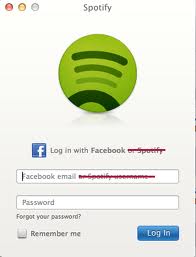
So, how can this partnership become lucrative for Facebook?  My hunch?  Spotify is trying to get bought by Facebook. And why not? Instagram, with 10 million active users, recently sold to Facebook for a billion dollars. Imagine what Spotify could sell for with 8 million more users than Instagram, plus an already established advertising platform?

If Facebook bought Spotify, almost all of Spotify’s 18 million users are already plugged in using their Facebook accounts. Users’ Spotify activity is already seamlessly integrated into Facebook. Spotify already has an ad platform, the main way that Facebook makes money. And finally, Spotify already has apps, which are a major part of Facebook’s brand platform.  All this will become the property of Facebook. 

With music being integrated into the social network, movies and TV shows (think Hulu) are bound to find their way in too, especially as people become more inclined to consume their content in a social way.  Why listen to a great new song by yourself when you can hear it with your friends too? 

Conclusion
Facebook may charge for some things eventually, but access to your account and normal activities will definitely not be one of them.

The one thing that all of Facebook’s revenue generating models have in common is that they rely on a critical mass of users to be successful. Facebook has that, and would never risk losing it by charging people for basic access to the tools that make its multi-billion dollar business work.

By Jennifer Pricci

May 30, 2012

The Long Road From Lead Generation to Sales Conversion

Marketers face lengthy time spans as they progress from lead generation to conversion, making it difficult to nurture prospects while moving them through the pipeline. This chart highlights the percentages of leads in each stage of the pipeline that are likely to advance to the next stage.


One of the most challenging obstacles to marketing is the time span from lead generation to sales conversion.

These long sales cycles put pressure on marketers to streamline the lead nurturing process.  When prospects first enter the pipeline, they may be months away from defining specifications, a budget or purchase timeline.

It is marketing’s responsibility to identify and fulfill the information needs of prospects at each stage and to advance prospects through the pipeline to a sales-ready stage as rapidly as possible.

What percentages of leads in each stage of the pipeline are likely to advance to the next stage? As this chart shows, on average, nearly four in 10 leads move from initial inquiry to being sales-ready, and approximately the same ratio advance from sales-ready to qualified prospect. As might be expected, the trend deteriorates moving to the next stage where only three in 10 qualified prospects convert to a sale.

The internal sales force has an edge – albeit slim – over top channel partners in percent of distributed leads closed. An organization’s own sales force is also three times as likely to close leads distributed to them as are their average channel partners.

The Deal. The Close. The Win.
Ultimately, making the sale is up to your sales team, but by implementing a sound nurturing and scoring process, you have helped them by establishing a relationship and positioning your company as a leader with the prospect. The Tools Just as a nice haircut and a manicure prepare you for that first date, every marketer should prepare for that introduction. You’ll need easy to use tools to help you nurture leads, including email, landing pages, forms, and lead scoring: essentially, a lead management solution.

Send triggered emails
Send a series of emails as part of a drip marketing campaign, or triggered based on specific prospect activities. Each email offers a document (or webinar, or trial software, etc.) that helps move your target along in their decision-making process.

Use custom landing pages
Don’t forget that custom landing pages can increase conversion rates by up to 48% during your lead nurturing as well as your lead generation activities. You only have eight seconds to get their attention, so use bullets, short forms, and no external navigation. And have only one call to action!

Use smart forms
You will get better response rates by using a form as the call to action on your landing pages, but why use the same form with the same fields over and over? Just like you wouldn’t ask your date for his or her name every time you see them, you shouldn’t ask for contact information again and again. Smart forms recognize known visitors and can fill in the fields you already know. Since you don’t have to ask for this, ask for other info, such as company size, time until decision, etc. Building the profile over time will help you in scoring the lead.

Use web analysis and lead scoring
Knowing which pages your prospects visit on your site can be very beneficial to determining their interest as well as their level of engagement. Being able to connect anonymous visits to actual prospects? Priceless.

Automate and measure
Salesforce.com and other customer relationship management (CRM) products are great, but they typically fall flat in their marketing capabilities. As marketers we need to automate the everyday tasks of building and managing lead generation and lead nurturing campaigns. We also need to more objectively score leads according to their company demographics as well as their activities on our websites, landing pages, emails and other campaigns. And a single lead source doesn’t cut it when lead nurturing. It’s great to know where we first encountered the prospect, but knowing what happens between that first meeting and closing the sale is imperative in these days of marketing accountability.

Evaluate
As you move through the nurturing process, you’ll probably discover that some of the assumptions you made are incorrect; for instance, that downloading a particular white paper means that they are close to buying or that sending a particular email would elicit a good response. Don't forget that lead nurturing – and marketing in general – is constantly changing. You'll want to stay flexible and be ready to change your lead nurturing process as you experiment with new tactics and learn what works.

What are you doing to lessen the cycle from lead generation to conversion?


By Jennifer Pricci

July 14, 2009

Cancel the Blamestorming Session: 3 Tips to Marketing / Sales Alignment

Historically, the relationship between marketing and sales has been (to put it politely) problematic, with lots of finger-pointing, and lots of valuable sales leads falling through the gaps between the two functions. But in an age of cautious spending, no company can afford to have sales leads disappear because of poor internal processes. To pull through the downturn successfully, you need sales and marketing teams that work together seamlessly and effectively… you need sales and marketing alignment.

And while sales may once have been the alpha in a not-so-happy-marriage, today the tables have turned. In the digital era, B2B marketing is not just responsible for getting names into the top of the funnel. They must also build relationships with those contacts, nurture them over time, provide guidance and information at every stage, and bring them to the point where they are qualified opportunities ready to convert.

Let’s cancel this week’s blamestorming session…
Here are 3 tips to promote effective sales and marketing alignment:

1. Score Your Leads Collaboratively

Effective lead scoring is essential to ensuring that only well-qualified leads are handed over to sales. The focus should be on bringing marketing and sales teams together to agree on the definition that will be used to score leads at each stage in the funnel. Establishing this together will avoid finger-pointing later, and will enable you to develop appropriate content for leads at every stage.

Together, the teams should decide on the criteria for scoring potential buyers all the way from a basic name entering the top of the funnel, through engaged party, prospect, lead, and finally opportunity. Lead scoring will consider factors such as the prospect’s interaction with your website and social media profiles, the amount and type of content viewed, shared and downloaded, information given in registration forms, and the results of any direct mail, events or other activities.

More importantly, don’t forget to score for negative behaviors, too. Activities like unsubscribing from emails or negative social media comments are signs that a prospect no longer wants to engage. Again, these definitions need to be agreed upon between both teams.

2. Stop Valuable Leads From Falling Through the Cracks

Once you have decided on how to define and score activities during the complete sales funnel, you will also need to set the ground rules for when a lead should be handed over to sales. Handing over only highly-qualified leads means Sales focuses all of its efforts on leads that are ready to convert, resulting in increased revenue and a better B2B marketing ROI.

But what if the weeks or months pass and the lead doesn’t move on to the next stage? That’s when many leads tend to fall into a limbo where neither marketing nor sales feels responsible for them. With budgets tight, marketing has understandably wanted to focus on getting more sales leads into the funnel, and on pursuing the ones that show a greater propensity to buy. There simply hasn’t been time or money to lavish attention on stalled leads that may never become customers.

But now, technological advances have made it possible to nurture leads over the long term cost-effectively, by keeping in regular automated contact and providing useful content based on what you already know about the lead.

But lead nurturing can’t be conducted independently by sales. There needs to be regular two-way communication between the functions, so that sales knows what activity the lead has undertaken and what messages and content have already been communicated to them. There also needs to be a smooth process for sales to hand back leads that have failed to convert, so they can be put back into the funnel for further nurturing.

3. Use Metrics to Show What’s Worked

One of the biggest challenges for any marketing team is to demonstrate how marketing spend is driving revenue for the business. Done properly, regular lead scoring and comprehensive lead nurturing deliver ample data that demonstrate how leads have been progressed through to conversion.

You still need to choose the right metrics. To truly demonstrate marketing’s value, you need to be measuring things like marketing program performance, impact on revenue and profit per customer.

Key Takeaway

Marketers, avoid a shotgun wedding by creating a long-term, healthy and happy relationship with sales.  Strive to understand their needs like they understand the customer.  Rely on them for the great information they bring from the field.  Work together to define your ideal lead.  That information will inform all of your marketing activities.  The rest is doing your due diligence when it comes to getting the job done.  While your role may be getting those leads into the funnel, it’s also about keeping that funnel clear of debris.


By Jennifer Pricci

May 19, 2009

Marketers Rank B:B Challenges

What are the greatest challenges that B2B marketers are facing? From generating high-quality leads and a high volume of leads to generating public relations buzz, see which challenges topped the list.

Today's Most Significant Challenges for
B2B Marketers to Overcome


The call from the sales force is not "Give us more leads" – it’s "Give us better leads." As you can see in the chart, marketing teams are aware of this issue and are responding to the challenge.

Depending on your lead generation process, lead quality may be the result of either the original state of the lead or of a nurturing process to determine if and when the lead is sales-ready. The latter case – a nurturing process – also addresses the second most significant challenge shown in the chart above: marketing to a lengthening sales cycle.

A strategic nurturing process not only identifies when a lead is sales-ready, but can pinpoint at which stage of the buying cycle the prospect is in, to forecast timely opportunities.

When the quality of a lead is dependent on its original state, it usually means that all but the most obviously disqualified leads are handed off to the sales force as they are generated. Surprisingly, this practice is still very common in B2B marketing.


By Jennifer Pricci