Showing posts with label social networking. Show all posts

June 12, 2012

Why will Facebook always be free? Here’s why...

On its homepage, Facebook prominently advertises that its service is "free and always will be."  Yet it hasn't stopped false rumors of a pay scheme from going viral on numerous occasions.

Why will Facebook always be free?
Here’s why:  It doesn’t need the money.

In 2011 Facebook pulled in approximately $4.27 billion in revenue -- double what the company made in 2010.  Projections for 2012 near $5 billion and last month we saw the social media giant go public -- bringing in significantly more capital.  Impressive numbers, but the bottom line is not necessarily the bottom line.

The company’s business model revolves around having as many users as possible. Remaining free is paramount to doing that.

Facebook makes money through three sources while allowing users on its site for free:

1) Advertising
2) Virtual Goods
3) Applications


Restricting users’ ability to use the site would actually be detrimental to that model.

Advertising
By the end of Q1, 2012, 82% of Facebook’s revenue came exclusively from advertising.    Highly targeted, affordable advertising based on the plethora of data that its members share on the site is extremely valuable to brand’s looking to engage with their target audience.  Facebook didn’t even introduce its ad platform until 2007 — because the company wanted to focus on adding users as quickly as possible – their most valuable money-making commodity.

When you see “Sponsored” on the right-hand side of Facebook, someone has paid for those links. Advertisers have the option of paying per 1,000 impressions (every time it shows up on somebody’s screen it’s an impression) or per click. Therefore, depending on how the advertisers set up their ads, Facebook gets paid every time someone clicks on or views an ad. A huge part of the Internet works this way, with ads generating many thousands of sites’ revenue.
  
By the end of Q1 2012, the network has generated 82% of their revenue through advertising.
However, the difference between it's division of revenue among advertising and other sources continues to increase. 

The way Facebook earns even more money with ads goes beyond offering advertisers good targeting data.  Facebook thrives monetarily from being useful to visitors. When Facebook makes a change, you can bet it’s either to:

  • Generate attention to their services so that people will use Facebook more and click/view more ads (note that even the “I HATE THE NEW FACEBOOK!” comments keep the attention on Facebook itself)
  • Generate more revenue from the ads (It’s rumored that Facebook will soon stop delivering business updates into your feed unless you interact with them a lot, meaning that they will have to buy advertising on Facebook)
  • Respond to features of another service (Facebook is changing a LOT in response to Google+),
    or
  • Improve their performance (meaning their servers don’t have to do as much work)

All of these things are driven by money.

If you Book Them, Will They Come?
In a recent poll by Reuters/Ipsos, four out of five Facebook users said neither advertisements nor comments on the social network have ever led them to buy a product or service.  The vast majority of Facebook users say they ignore ads on the social network.  Google appears to be more effective at attracting clicks, as The Wall Street Journal cites a click-rate that is seven times that of Facebook.

Facebook has also proven ineffective in a B2B environment. Like all other Internet ads, Facebook ads also have a very low conversion ratio. However, if you follow my blog regularly, you know the importance I place on integrated strategy, so for my recommendation would always be for B2B’s using Facebook to use it as a supplemental marketing strategy rather than a sole marketing strategy.  (As with any marketing, the key to success is to understand the benefits and limitations of different advertising tools and to identify what fits the company and the product.)

In the face of scrutiny regarding the effectiveness of their ads, Facebook is now rebuffing claims that their advertisements are ineffective.  They’ve come out with their own research results, which show that most ad campaigns get companies $3 for every $1 they spend.  The Los Angeles Times reports that the data released by Facebook, together with comScore, shows that 70% of ad campaigns will get advertisers a return three times what they put in and, in nearly half of all campaigns, Facebook ads get companies $5 for every $1.

“This provides some strong evidence that Facebook can be an effective marketing channel,” said Andrew Lipsman, vice president of industry analysis at ComScore, to Bloomberg. “These are strong results.”

Virtual Goods
Zynga is an innovative company that brought casual gaming to the masses, there most popular game being FarmVille that users can play via Facebook -- and of course share socially their journey through the game.  As far as their business model, Zynga gives their games away for free, but charges gamers for “virtual goods” that can be purchased inside of a game.  These “virtual goods” allow gamers to experience new capabilities and access new features that were previously locked down.   While this may sound like somewhat of a gimmick, the “virtual goods” business model has been extremely lucrative for the company.


Facebook takes a cut when users buy virtual goods on games played through the network.  In the FarmVille example – simply put, each time a user buys a cow, they put in their credit card information and Facebook takes a 30% cut of Zynga's revenue on that cow.  And a roughly similar cut from other companies.

How big a business is this?  According to PC Magazine, Zynga contributed about $445 million to Facebook's profits last year.  The worldwide revenue from sales of virtual goods is expected to hit $15 billion in 2014, and Facebook plans to continue to get a growing percentage of that market.

And “virtual,” is not necessarily a literal interpretation of a cow you neither have to house nor feed.  Retailers are offering more on the Facebook platform and for Facebook that means a cut. It won't be able to take the same 30% it gets from Zynga, but if say, J. Crew, starts offering shopping without leaving Facebook, if the social network takes even 5%, that could be meaningful to its bottom line.

Applications
There is a way that Facebook could make money with integrated applications and services. 
Let’s take Spotify for example.  Spotify did backflips given the opportunity to partner with Facebook and leverage the network’s massive audience, an audience who spends 15% of their total Online time on the social network.  Facebook and Spotify have a streaming pact that allows the cloud-based music service on the profile pages of millions -- note that you must have a Facebook account to access Spotify, this is key. And Spotify was happy to enter into this agreement for free, especially given their recent gargantuan competition in the forms of Amazon Cloud Player and Google Music.

Right now, no money is changing hands.  It’s actually been a dream of Zuckerberg for quite some time to have a music platform on the network with many previous plans going the way of the “Facebook Poke.”  The partnership with Spotify signifies how Facebook is flexing its muscles in the media space, offering services that keep people within the social network, rather than scouring other parts of the web for content.
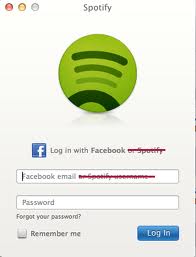
So, how can this partnership become lucrative for Facebook?  My hunch?  Spotify is trying to get bought by Facebook. And why not? Instagram, with 10 million active users, recently sold to Facebook for a billion dollars. Imagine what Spotify could sell for with 8 million more users than Instagram, plus an already established advertising platform?

If Facebook bought Spotify, almost all of Spotify’s 18 million users are already plugged in using their Facebook accounts. Users’ Spotify activity is already seamlessly integrated into Facebook. Spotify already has an ad platform, the main way that Facebook makes money. And finally, Spotify already has apps, which are a major part of Facebook’s brand platform.  All this will become the property of Facebook. 

With music being integrated into the social network, movies and TV shows (think Hulu) are bound to find their way in too, especially as people become more inclined to consume their content in a social way.  Why listen to a great new song by yourself when you can hear it with your friends too? 

Conclusion
Facebook may charge for some things eventually, but access to your account and normal activities will definitely not be one of them.

The one thing that all of Facebook’s revenue generating models have in common is that they rely on a critical mass of users to be successful. Facebook has that, and would never risk losing it by charging people for basic access to the tools that make its multi-billion dollar business work.

By Jennifer Pricci

June 25, 2011

What is The Social Funnel?...
And Why You Need to Build One

Social media channels increasing the venues of choice for consumers to collect information and connect with brands, presents a strategic opportunity for companies to create a “Social Funnel” above the traditional marketing and sales funnel – where consumers take the lead in finding information and content that ultimately drives brand preference and sales.

In Winning the Consumer Decision Journey, McKinsey & Company’s David Court shares that, in the new social and digital age, “the path to purchase and loyalty is now complex, iterative, and dynamic.” In this new environment, creating a Social Funnel allows brands to identify and have access to buyers long before the buying process begins.

The Social Funnel Defined
The Social Funnel is a dynamic collection of consumer activity across social media channels, which sits on top of the traditional marketing and sales funnel. Developing a Social Funnel requires a systematic process of identifying and capturing consumer interactions across a variety of social media channels, aggregating this activity in a social customer relationship management (SCRM) infrastructure, and continually mining this insight to deliver relevant content to the right social profile at the right time. The chart below describes the Social Funnel and its tie to the traditional marketing and sales funnel:


To be effective, Social Funnels need to be tightly integrated with traditional customer relationship management (CRM) systems to create a 360-degree view of a prospect to allow marketers to nurture this relationship over time using a combination of social and traditional, experts agree that this integration holds a lot of potential. “Integrating social deeper into existing CRMs is going to be very popular in 2011 – we expect to see a growing number of brands tying customer records to public social profiles and bread crumbs”, says Nathaniel Perez, head of social experience at SapientNitro.

The integration of social media with the traditional funnel is one of the key priorities for brands in 2011. Although only 6% of companies today report that they fully integrate social with traditional marketing funnels.

David Berkowitz, senior director of emerging media and innovation for digital marketing agency 360i, agrees but tempers things by saying that “we are still early in the process but tying social profiles to CRM systems will be big.”


We see a growing number of companies starting to tie social profiles to their CRM systems. As this process continues to evolve, we expect to see social media becoming more of a critical component throughout the entire customer lifecycle. Systems that support the integration of social with CRM will increase in adoption over the course of the next 12 to 18 months, giving organizations the ability to seamlessly combine data from multiple systems easily and efficiently.


By Jennifer Pricci

September 2, 2010

RIP Cold Calling, Survived by Social Networking

Cold calling has been served notice, a new era beckons and with it an altogether different way of working. Social networking has arrived and will soon replace cold calling as the predominant method of prospecting in business.
I know many people will think that there is no replacement for activity, specifically picking up the phone. Yet, no matter how intelligent you are about cold calling, it is what it is – speculative, scatter gun selling, not to mention costly and increasingly ineffective.
Consider the following data I found online...
In a test which spent an equal amount of time cold calling and using social media (9 AM - 5:30 PM; M - F).
Cold Calling Results
  • Outbound calls made 325
  • Meaningful conversations (pitches) and brand touches 80
  • Meetings made 4
  • Sales made (as a direct result of cold calling) 0
These are average conversion ratios for time spent but it comes with much overhead.

Social Media Results
  • Inbound calls generated 8
  • Meetings as result of inbound calls 3
  • Sales as a result of inbound calls 2
  • Brand touches (from site statistics unique views of content) 422
  • Visitors to sales associate's blog Subscribers (RSS) to sales associate's content 27
  • People following sales associate's Twitter 12
  • New contacts 71 (on LinkedIn, Facebook, WeCanDo.BIZ, etc)
  • Listeners to sales associate's Podcast 83
  • Opportunities to sell found 21
  • Online conversations had 39
  • Warm call list (names generated expecting a call) 11

The cost of the social networking blitz to find new business opportunities, other than time and internet connection are small, if anything at all. Most importantly 2 sales were closed, covering any cost associated with the activity and generating a very healthy return.

The central question, however, is do modern-day sales people have the level of skill required to conduct a social media campaign individually? The simple answer is no. Not all salespeople will have the necessary skills, but having a skills gap is nothing new on the sales floor otherwise we wouldn’t have the multi-million pound training industry!
Can the skills be taught quickly and cost effectively? Yes. I have always taught people that sales is a process: follow steps one through five to achieve your aims. Social media networking can be processed as well, giving salespeople clear guidelines on the ‘how to’ and ‘how not to’. We spend millions every year teaching salespeople to cold call better, use the latest CRM (customer relationship management) system, be better team players and so on; and so it must come to pass that companies will need to train all staff to be ‘social media savvy’ as it extends far beyond just sales – marketing and service need to be in on the picture as well. 
Naysayers?... Agreed, updating your Facebook page with pictures of the weekend, playing silly games, nudging or poking other people is not the best use of your company’s time. But creating engaging, thought-provoking, discussion-opening content, centred around your products or services is. 

Social media networking will reduce dependence on cold calling. I am not saying it will eradicate the need for the telephone – that perhaps is to bold an idea. But I am certain it will become the first step in prospecting for new business.

What kind of results are you seeing when you pin Cold Calling vs. Social Networking?

June 15, 2010

What are your top 3 favorite social networks?

"A cord of three strands is not easily broken."
That's applicable where social networking is concerned as well. It's a matter of strengthening your social graph. Being networked with a given individual in three different places makes for a strong connection.
More and more business professionals are using social networks to build relationships, meet new contacts, and market themselves. For the uninitiated, however, diving into the virtual meet-and-greet can be daunting. Where to begin?
For first-time users, the answer is LinkedIn. LinkedIn is your business suit. Developed specifically for business, the site doesn’t run the risk of blurring your professional life with your private one; and with more than 25 million users, it serves virtually every industry and profession.
While LinkedIn is not very conversational in its orientation, having a profile there has become expected. LinkedIn lends a degree of professional credibility. It is also the site that requires the least amount of upkeep.
Now Facebook... that's business casual. Facebook allows more of a 360-degree view of you, combining both professional and personal sides. Plus, it's a more conversational platform.
Twitter is cocktail hour. Think of after hours social networking events and you've got Twitter. It's the most informal of the three and allows for the greatest degree of conversation.
It's not enough that you have a presence on each of these sites, but that you leverage your presence to connect with others who are also present on each. Social media is about being "social." Each platform offers its own distinctive advantages, but it takes all three to build the strongest connection. Plus, it gives you ubiquity. You're everywhere!

May 23, 2010

Is Viral Marketing Still In Vogue?

Viral campaigns yield the highest ROI... Information about your product spreads naturally, like a contagious disease... only a good one...
I once read up on the 5 C’s of viral marketing:
Community, Compelling, Comedy, Charity, and Contest
Let's talk Community...
We all know that viral marketing in the social media space is all about communities. In fact, I would argue that communities play a larger role than most people think, both online and offline. They can build a brand, kill a brand, make a career, break a career, influence elections, etc. Think about it; from an offline perspective, life is community driven through PTA organizations, church groups, sports leagues, stay-at-home mommy groups, and various school organizations (sororities, fraternities) to name a few. And of course online, you have Myspace, Facebook, Linkedin, Digg, Stumbledupon and hundreds of other social media sites jumping in the scene daily.
Within each of these online/offline communities consumers are talking and having conversations with each other. And, they are sharing opinions, experiences, advice, recommendations and commentary about products, services and companies usually based on real personal experience.
THIS IS VIRAL MARKETING.
The challenge with viral marketing is that it’s not always viral, if that makes any sense... Often, marketers plan for and label their marketing plans as “viral” but 9 times out of 10, it never catches on. It’s the things that just happen by accident that become viral. Remember the Diet Coke and Mentos video? At first, Coca-Cola distanced themselves from the exploding Diet Coke and Mentos viral video phenomenon, fearing it would damage their reputation and brand; however, just recently that have fully embraced the concept and now there are over 7,000 consumer generated videos on YouTube, millions of pageviews, hundreds of comments, and favored by thousands of fans. The community here is not only the millions of YouTube enthusiasts, but also the micro-communities of people and their offline conversations about these videos.
So, while I do believe it is impossible to craft a viral campaign, you can certainly try to influence one:
  • Formulate your marketing message. Think about product or service you are advertising and create a message that communicates the benefits and uses of what you are selling. A website is nonnegotiable.
  • Make the content on your website sharable. For example, you can allow readers to embed a funny video from your website onto their own blogs. An "email this article to your friend" link is another way information spreads from one person to another.
  • Use email as a viral marketing tool. Include a marketing message about your product or service in the tag lines of your emails and also include your advertising message in auto responder emails you send to those who email you.
  • Post your content on other Internet sites such as message boards and blogs. However, do this carefully; many forum managers are now aware of this practice and may delete your messages if they think it's spam.
  • Incorporate your marketing message into rich media. Video clips and Flash games are very popular on the Internet, so if you have a great idea for this medium your message will spread like wildfire.
  • Spread your message off line as well. Tell your friends and colleagues about your product or service and hand them business cards with the URL on them along with a catchy tag line, perhaps the same one you use in your emails.

What are you doing to boost your buzz factor?

January 22, 2010

Does Networking Play An Important Role in Getting Clients?

Social Networking should certainly help you and your business obtain new clients. In a recent answer I posted regarding Cold Calling vs. Social Networking I cited the following statistics:

Cold Calling Results
Outbound calls made 325
Meaningful conversations (pitches) and brand touches 80
Meetings made 4
Sales made (as a direct result of cold calling) 0
These are average conversion ratios for time spent but it comes with much overhead.

Social Media Results
Inbound calls generated 8
Meetings as result of inbound calls 3
Sales as a result of inbound calls 2
Brand touches (from site statistics unique views of content) 422
Visitors to sales associate's blog Subscribers (RSS) to sales associate's content 27
People following sales associate's Twitter 12
New contacts 71 (on LinkedIn, Facebook, WeCanDo.BIZ, etc)
Listeners to sales associate's Podcast 83
Opportunities to sell found 21
Online conversations had 39
Warm call list (names generated expecting a call) 11

The cost of the social networking blitz to find new business opportunities, other than time and internet connection are small, if anything at all. Most importantly 2 sales were closed, covering any cost associated with the activity and generating a very healthy return.
...If you are not getting results from social networking, you need to adjust how you network. Here are five tips to help you do just that:
  1. You Should Always Network In The Right Forums. If your networking objective is to get clients, you should network in social networking communities that your potential clients frequent.
  2. Network On A Regular Basis. If you are only networking when you need to get clients, you are wasting your time. Networking is not a one-time action; rather, it is a process of having others get to know you and building relationships with them. You need to use online social networks continuously to raise your online visibility and develop relationships with others.
  3. Network, Don’t Sell. A business owner told me once “I keep posting about my business on every social network every chance I get, but have no takers.” This person is not really networking. Rather, he is selling his products and services instead of building relationships. Networking is about creating awareness for your products, not blatantly advertising them.
  4. Provide Information About Your Business. While some people try to sell their products more then they should, there are others who don’t tell people anything about their business when networking online. Remember, if people you are networking with have no way of learning more about you your business, they will not be able to do business with you. How do you let others know about your business? Use a signature at the end of every message you post when networking online. Make sure your signature contains some information about your business and a link to your web site, so that everyone reading your posts can learn more about you and your business.
  5. Invite Others To Subscribe To Your Newsletter. The best way to continue building relationships with people you meet on social networks is to ask them to subscribe to your newsletter. Use your signature when you are networking online to invite people reading your message to subscribe to your newsletter. When they do, you can continue building relationships even if you or they stop networking on the forum altogether.

November 22, 2009

The First Three Steps Toward Social Media Marketing

While other channels are looking at cutbacks, social media marketing is on a growth path because it's low cost, it's proving to work, and it represents the future of marketing.
Creating a social media marketing plan should depend on your market’s needs and your company’s capabilities and offerings.
In my opinion, your first three steps should be: 
  1. Clearly identify your target
  2. Identify the key issues your target cares about as it relates to your offerings.TIP: create a bulleted list with no more than three or four words per item
  3. Research which, if any, top bloggers are discussing these issues.TIP: User your bulleted list to search.
The following are good places to start:
  • Technorati
  • Del.icio.us
  • Google Blogsearch
  • Ask.com Blogsearch
Inevitably, any substantial subject matter area has a back channel where top bloggers and influencers chat. For example, PR and marketing bloggers tend to connect on Facebook, Twitter, and to some extent, LinkedIn. This back channel can yield powerful connections to highly influential minds who may not have blogs with top statistical ranking.

Marketers looking to find their subject area’s back channel should start with a basic search. Once your initial search yields important blogs, visit them and note which social networks the bloggers use to connect. Join their communities. And learn what your target really cares about.

Don’t just observe, participate. Comment on blogs and social networks in a non-promotional way.

April 17, 2009

What to do first when you get laid off?

The top seven steps are: exit gracefully; secure whatever additional pay and benefits you can; apply for unemployment; get health coverage if possible; get real about your expenses; roll over your 401(k); and start your search. 
  1. Exit gracefully.

    Your old boss might become the link to a new job and at the very least can be a great reference by providing a letter of recommendation.
  2. Secure whatever you can.

    It depends on your level in the company, but try for an extension of your salary, health benefits or life insurance benefits; a positive letter of recommendation from your supervisor, use of your office for a a period to search for another position or use of an outplacement firm; even your laptop or other equipment that will help you get a new job. (If you get severance, take advantage of the health benefits – get physicals, dental checkups, fill prescriptions.)
  3. Apply for unemployment immediately.

    Typically, you can still collect unemployment even if you receive a severance, and if you take a part-time job while you are looking for a new position, you may be eligible for partial benefits. Regular benefits are paid for 26 weeks in most states and some will extend that under certain circumstances.
  4. Protect your health benefits.

    Enroll in Cobra if your employer is required to have it. (Companies with 18 or fewer employees are not.) Complete the forms to continue your health insurance; you’ll have to pay a monthly fee, but it’s worth it — don’t leave a gap in your coverage. If you can’t get insurance through your company, call a health insurance broker and see what plans you can qualify for.
  5. Get real about your expenses immediately.

    You have to know what you are spending monthly so you know where you can cut costs to avoid getting into debt while you’re laid off. Search “track your spending” on this site to get tips on how to control your costs.
  6. Roll over your 401(k) plan directly to an individual retirement account.

    Do not cash it out, or take a check from the company with the intention of opening an IRA. You have a limited time to get it into that new account or the government will consider it a withdrawal and if you’re under 59-1/2 you’ll pay a 10 percent penalty, and no matter what your age you’ll pay income tax. Sadly, 80 percent of people with $10,000 or less in a 401(k) cash it out when they leave the job – but in reality, after taxes and penalties, that $10,000 is closer to $6,000 if you’re in the 28 percent tax bracket.

    Go to the websites of Fidelity, Vanguard, Schwab or T. Rowe Price, where you can find the forms that allow you to roll the money over directly.
  7. Start your search.

    Take one or two days to regroup, and then schedule at least 3 to 6 hours a day to work on your job search. Refresh your resume and join an online social network if you don’t belong to one.

    Begin with LinkedIn and leverage gadgets to s
    howcase your work, embed your blog or link to your other profiles. Network through whatever other affiliations you have – religious and volunteer organizations, sports clubs, alumni groups, etc. Call headhunters in your industry – don’t assume that they are overwhelmed with people contacting them.

March 17, 2009

Twitter... Are You Missing The Boat?

If you tuned into The Apprentice Sunday, March 8, you would have watched the "boys and girls" come up with a new slogan for Zappos. The CEO of www.zappos.com was the judge and selected the "gals" proposal. 
What stunned me, while watching the show, I happened to Tweet @zappos, and got a reply within 3 minutes. What I didn't realize at the time, that it was the CEO Tony Hsieh, sending me a message. 
Whats remarkable, here is a CEO of a $1B company, watching with the rest of us, probably his biggest marketing exposure (and expense) on national TV and he is on Twitter, tweeting to anyone that sends a message. 
How many CEO's of $1B companies do you know, that even know what a Tweet is, actually use it and are using it to their corporate advantage?
So are you missing the boat?
I became a fan of The Apprentice early on in the series. As a marketer I found it interesting to see so many promising young professional spread their marketing wings at the many tasks surrounding such high-end brands.

I saw the Zappos.com Celebrity Apprentice episode. I am struggling as a fan of the show with the Celebrity episodes as these individuals are not marketers and it is so painful to watch them fumble through fundamental marketing challenges.
I’ve seen Tony Hsieh, CEO of Zappos.com, featured many times before and find his business plan completely refreshing. It is no doubt that his emphasis on customer service and corporate culture is responsible for his huge success as a brand and, ultimately, their sales growth of 1.6M in 2000 to over $1 billion in 2008. I did find, however, that the show was either edited poorly or the part he played in the “RFP” process was below par. He did not discuss the target consumer at all, rather, broad stroking it; and, although he did mention customer service, I do not feel he placed appropriate emphasis on this core competency given its direct relationship to their success. (Note: I am a loyal Zappos consumer because of their customer service.)
Many companies are looking for guidance with branding on Twitter. To begin with, they need to know how to use Twitter, what it’s all about, who should handle Twitter (marketing sales, PR,) who to follow, etc.
Then to the question: Should the CEO or business owner also have a Twitter profile? This is a great question and one that takes some time and thought. Good social media consultants will tell you that social media marketing requires a strategy – and it’s not necessarily the type of “boiler plate” marketing strategy companies may be used to.
This key question – should the CEO (and other key management) have a Twitter profile to be part of the social media strategy?
Tony Hsieh is a highly visible CEO on Twitter right now (his profile is Zappos.com CEO.) This strategy blends the brand. This is definitely a trend we’ll be seeing more of. Tony even posted a Beginner’s Guide that can be helpful to business owners and entrepreneurs:
It is important to know that while good personal branding involves self-promotion, there’s more to it. The social media world is all about “Give to Get” and engaging in two-way conversations. The value comes from not what you are doing; rather it comes from what you are thinking and sharing. It is about conversations and building relationships; not hard sell marketing, broadcasting or ego-driven tweets.